INSTALLATION
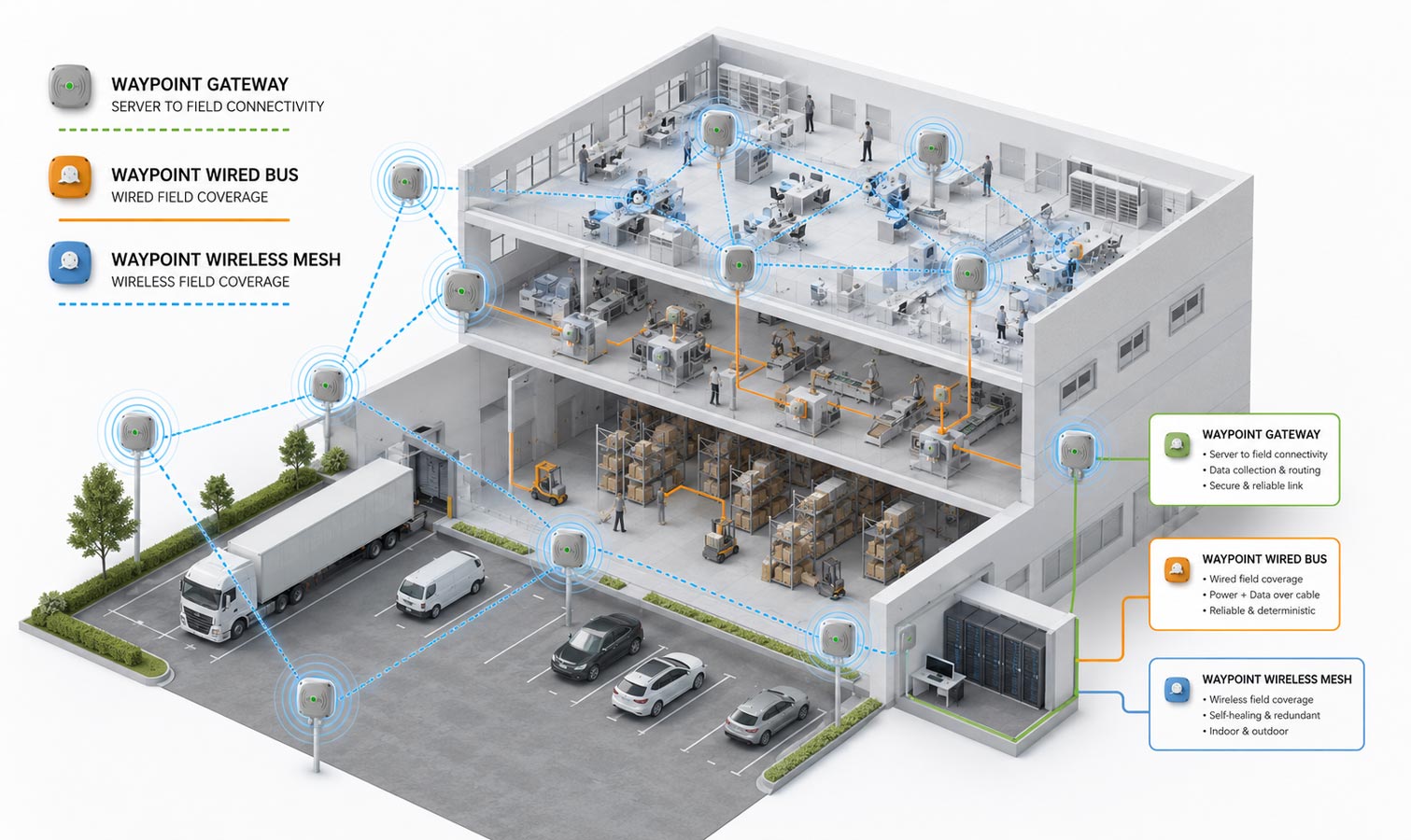
The ITT system is designed for quick and easy installations that does not require structural changes or invasive interventions on the building, as it leverages the existing wired network infrastructure (via PoE technology) or can be easily extended wirelessly.
Dual-Range Positioning Technology
The ITT ecosystem combines two complementary positioning technologies to provide both large-area
coverage and high-precision localization within the same infrastructure.
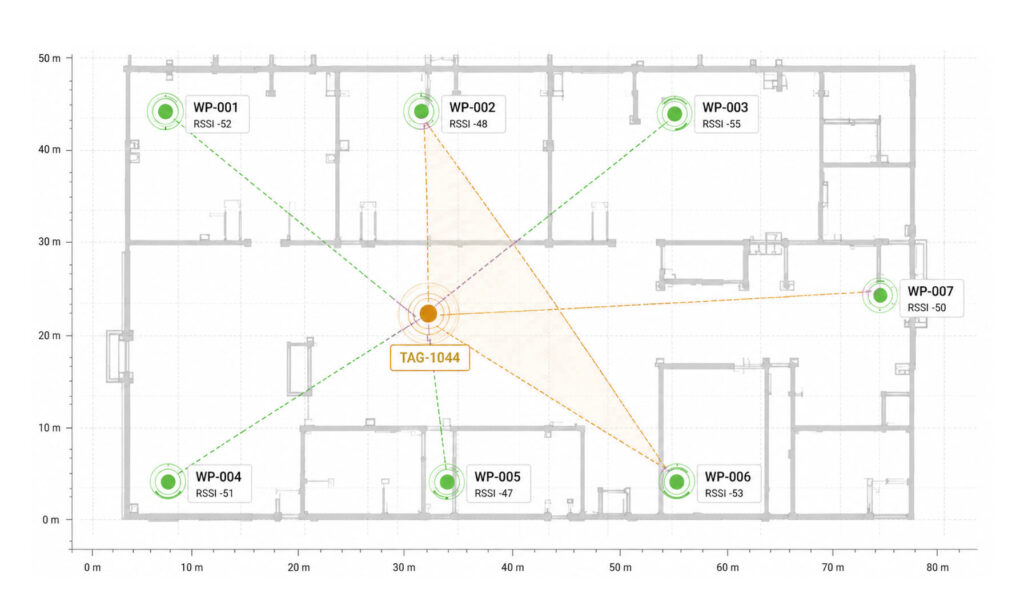
All WAYPOINT support WIDE RANGE Positioning, operating on the 868 MHz band and providing reliable
zone-based localization across large environments. This operating mode allows the system to determine the presence and approximate location of TAG within a defined coverage area, making it ideal for personnel monitoring, asset tracking, logistics operations, and industrial applications.
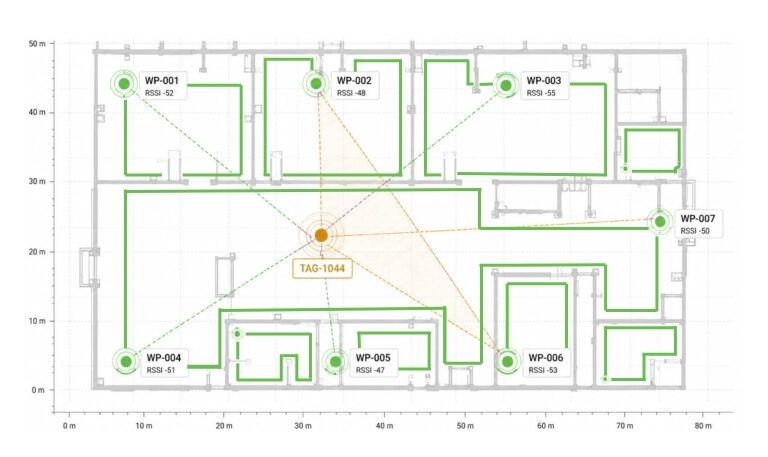
Selected WAYPOINT models can further enhance positioning accuracy through the optional CLOSE RANGE
Positioning technology operating at 125 kHz. CloseRange positioning is designed to identify TAG with significantly higher precision, enabling location accuracy below one meter. Depending on deployment
requirements, CloseRange functionality can be achieved through integrated low-frequency antennas
embedded within the WAYPOINT itself or through dedicated perimeter-wire installations.
Perimeter-wire technology enables precise identification of TAG presence inside specific areas such as offices, laboratories, warehouses, production cells, fenced zones, gates, restricted areas, parking zones, and access-controlled environments.
By combining WideRange and CloseRange technologies with ITT’s advanced triangulation algorithms, the
system delivers a unique positioning solution capable of covering large infrastructures while simultaneously
providing highly accurate localization in critical areas.
HOW TO INSTALL THE INFRASTRUCTURE
Installation strategies vary based on site size, required localization accuracy, and environmental conditions. However, thanks to ITT’s modular architecture, most configurations can be carried out independently. Our team remains fully available to provide remote pre-sales and post-sales support. Please don’t hesitate to contact us for any questions.
The ITT ecosystem has been designed to adapt to virtually any installation scenario, from temporary deployments and pilot projects to large-scale industrial infrastructures and mission-critical environments.
This modular approach allows system designers to combine multiple technologies within the same project, selecting the most suitable solution for each operational area.
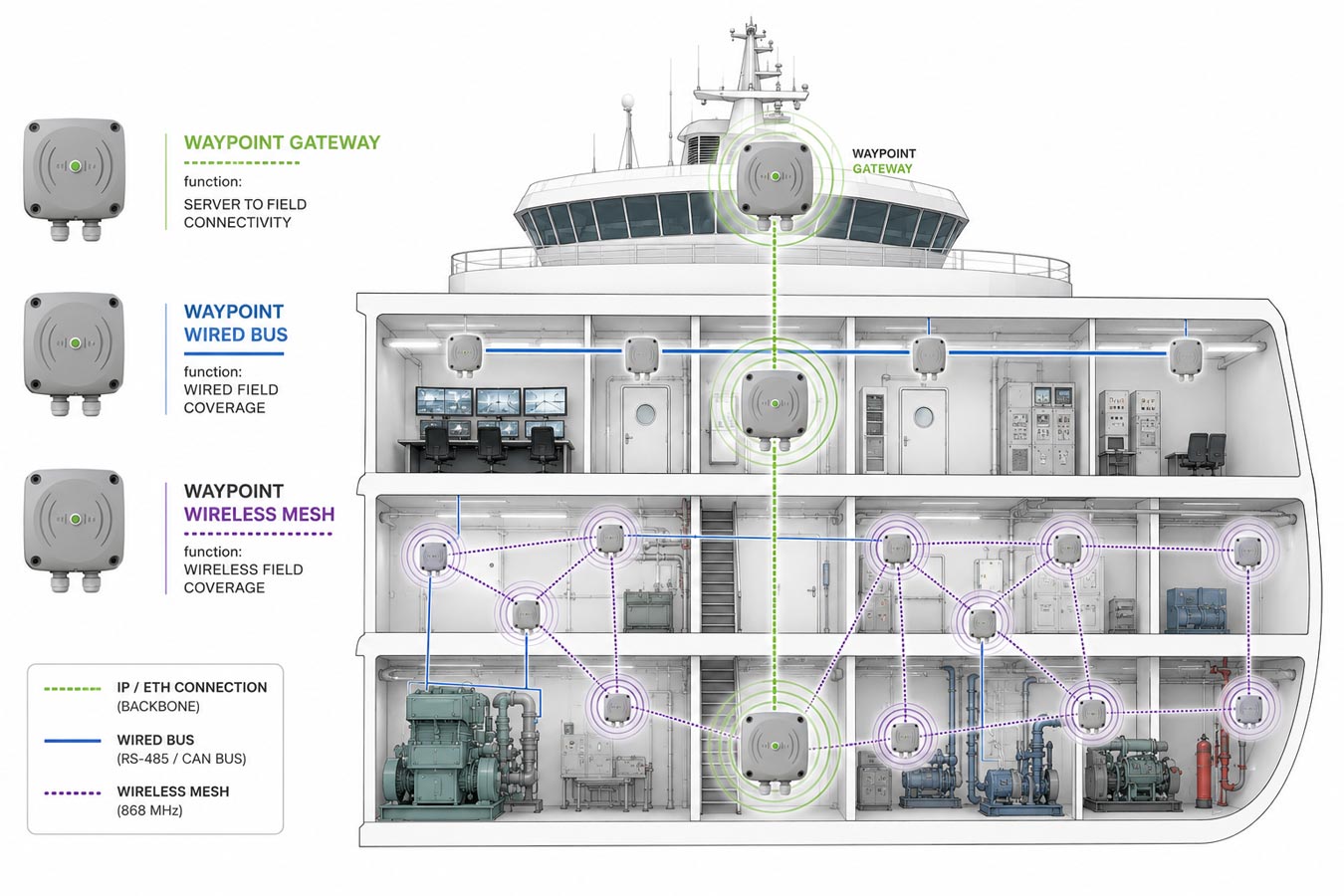
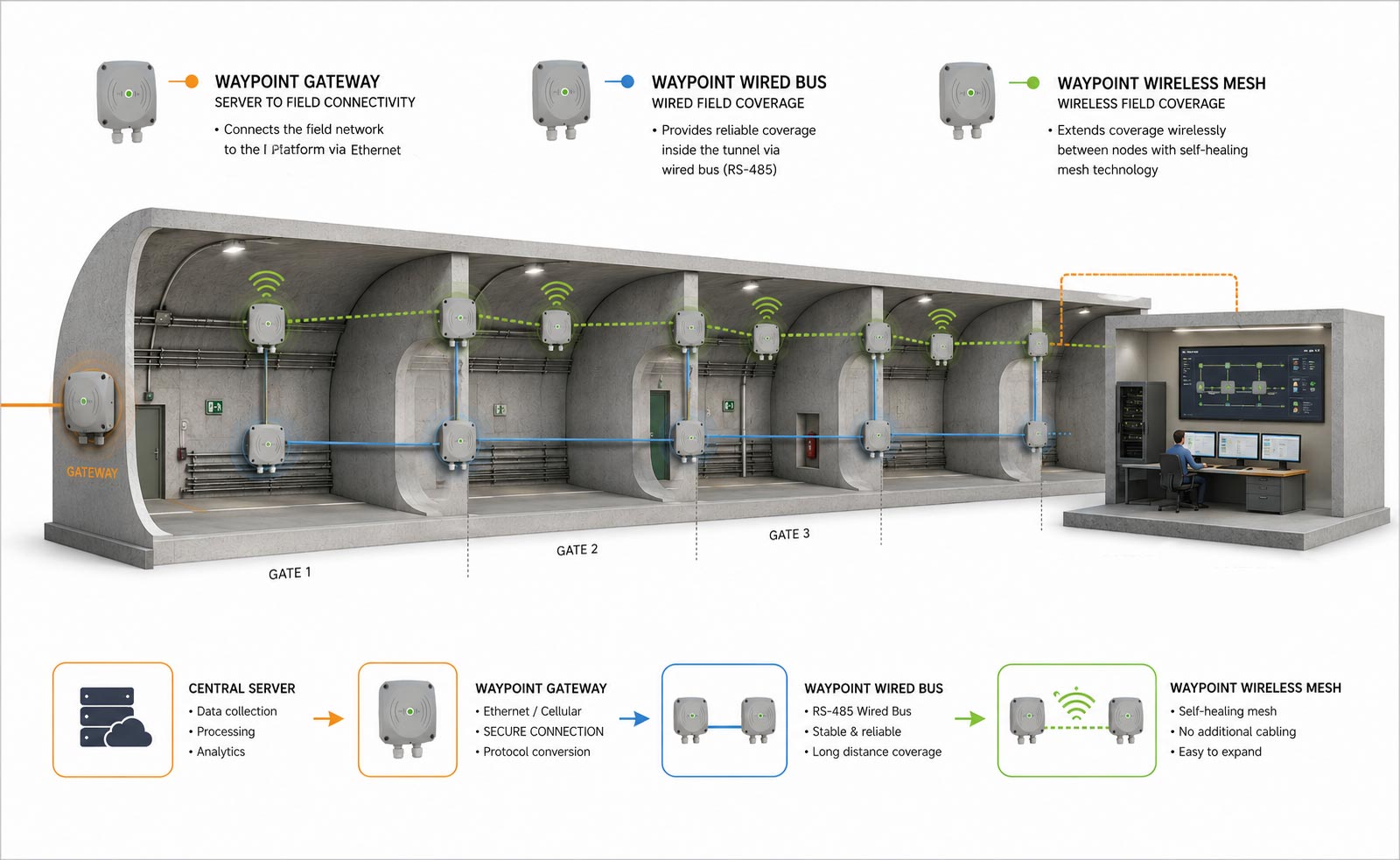
The deployment architecture consists of three complementary layers:
Server-to-AREA Connectivity
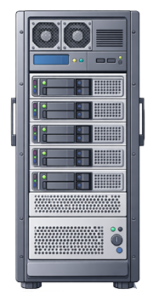
The first layer of the ITT infrastructure connects the central ITT SOFTWARE SUITE server to one or multiple operational areas while maintaining centralized monitoring, configuration, diagnostics, and data processing.
Depending on project requirements, different connectivity approaches can be adopted.
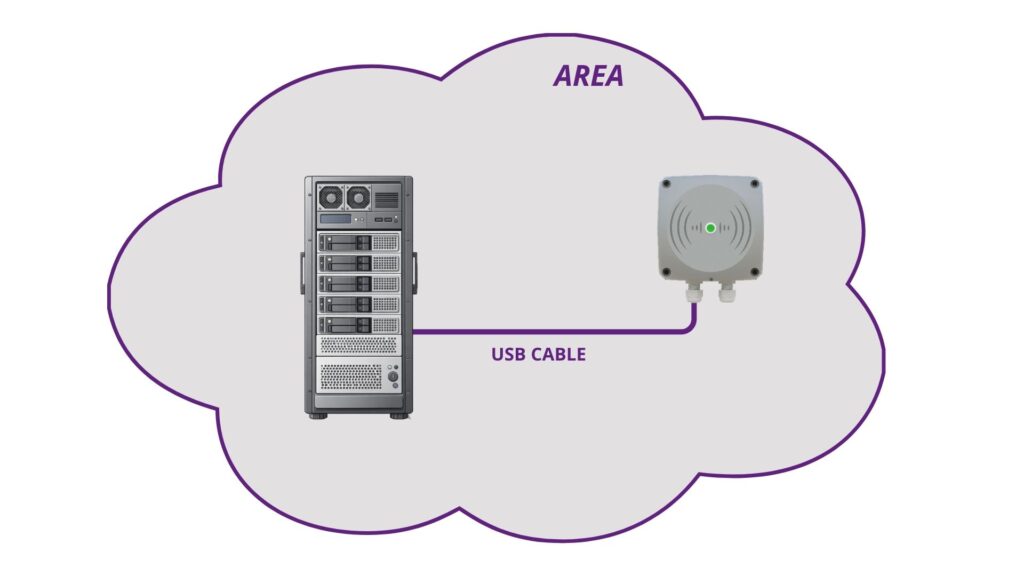
USB Connection
USB connectivity represents the simplest and most flexible deployment option.
It is particularly suitable for demonstrations, temporary installations, proof-of-concept projects, laboratory testing, and small-scale deployments where only a limited number of WAYPOINT are required.
The main advantages include rapid setup, minimal infrastructure requirements, and immediate integration with the ITT platform without the need for dedicated networking equipment.
Typical Applications
- Demonstrations and trade shows
- Pilot projects
- Laboratory testing
- Temporary installations
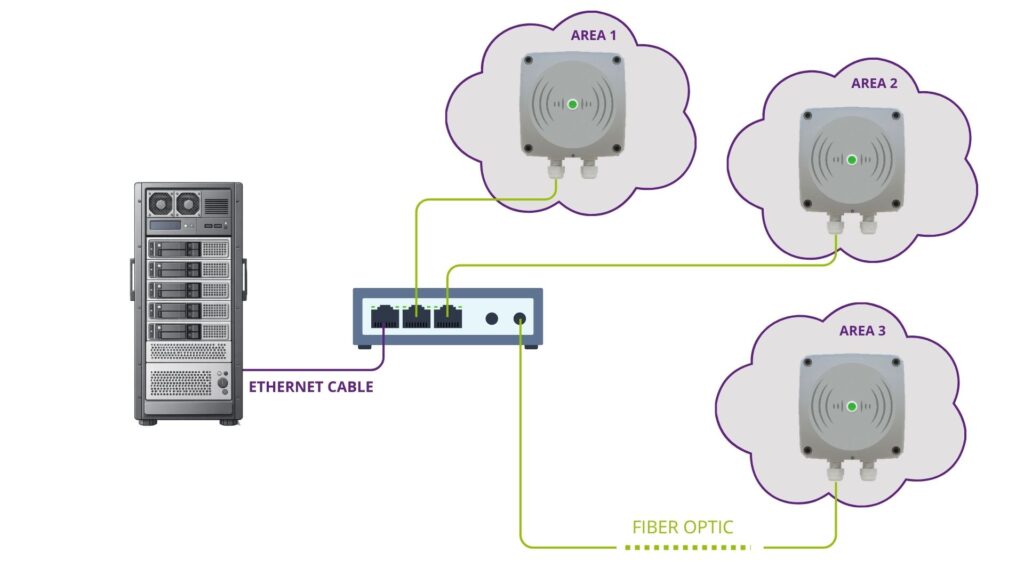
Ethernet & Fiber Infrastructure
Ethernet connectivity represents the standard architecture for permanent installations. WAYPOINT can be connected through existing LAN infrastructures or dedicated Ethernet networks.
For larger facilities, Ethernet backbones can be extended through fiber optic networks, allowing communication between distant buildings and operational areas while maintaining centralized management and monitoring.
Benefits
- Utilizes existing network infrastructure
- Simplified installation through PoE
- Excellent scalability
- Long-distance connectivity through fiber optics
- Centralized management of multiple operational areas
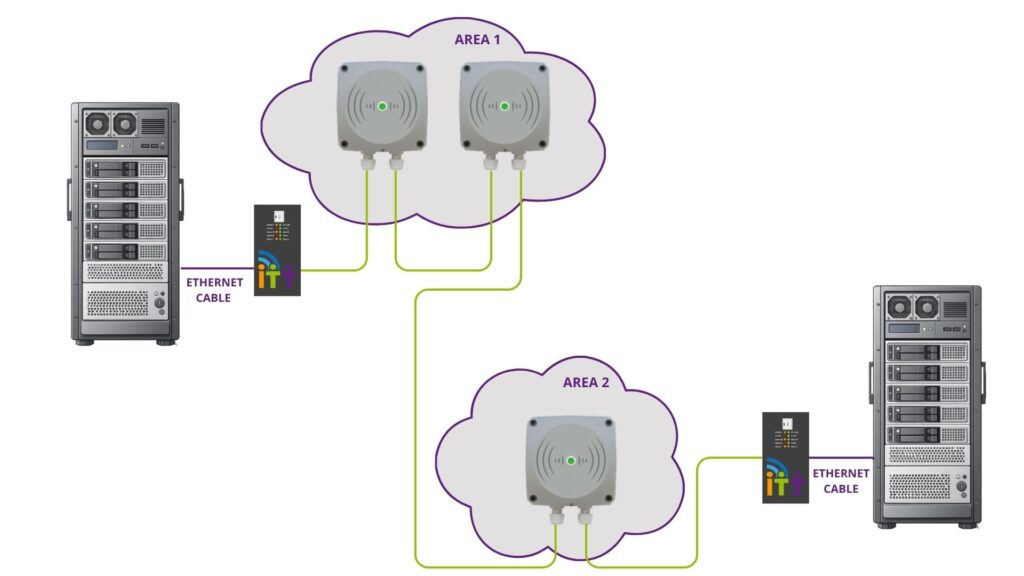
Fault-Tolerant Communication Bus
For mission-critical environments, ITT supports dedicated fault-tolerant communication buses such as the POWER BUS.
These architectures combine power distribution and data communication within a single infrastructure while providing redundant communication paths and enhanced operational reliability.
The communication bus is terminated at both ends by dedicated controllers connected to the ITT Core server, ensuring continuous monitoring and maximum system availability.
Benefits
- Redundant communication paths
- High fault tolerance
- Continuous operation in critical environments
- Combined power and data infrastructure
- Optimized for large permanent installations
WIRED Area Coverage Infrastructure
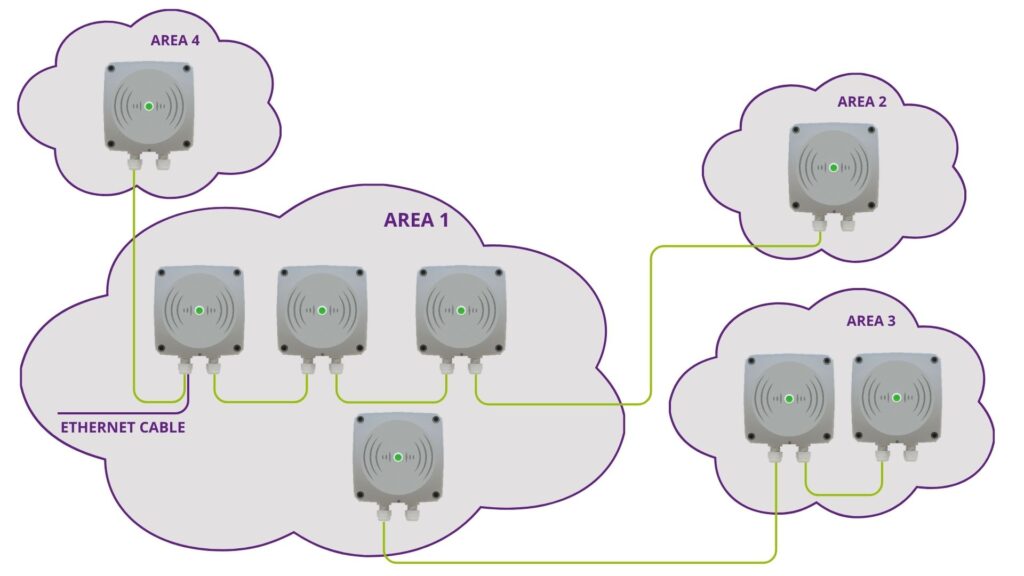
Whenever cable routing is practical, wired WAYPOINT deployments represent the preferred solution.
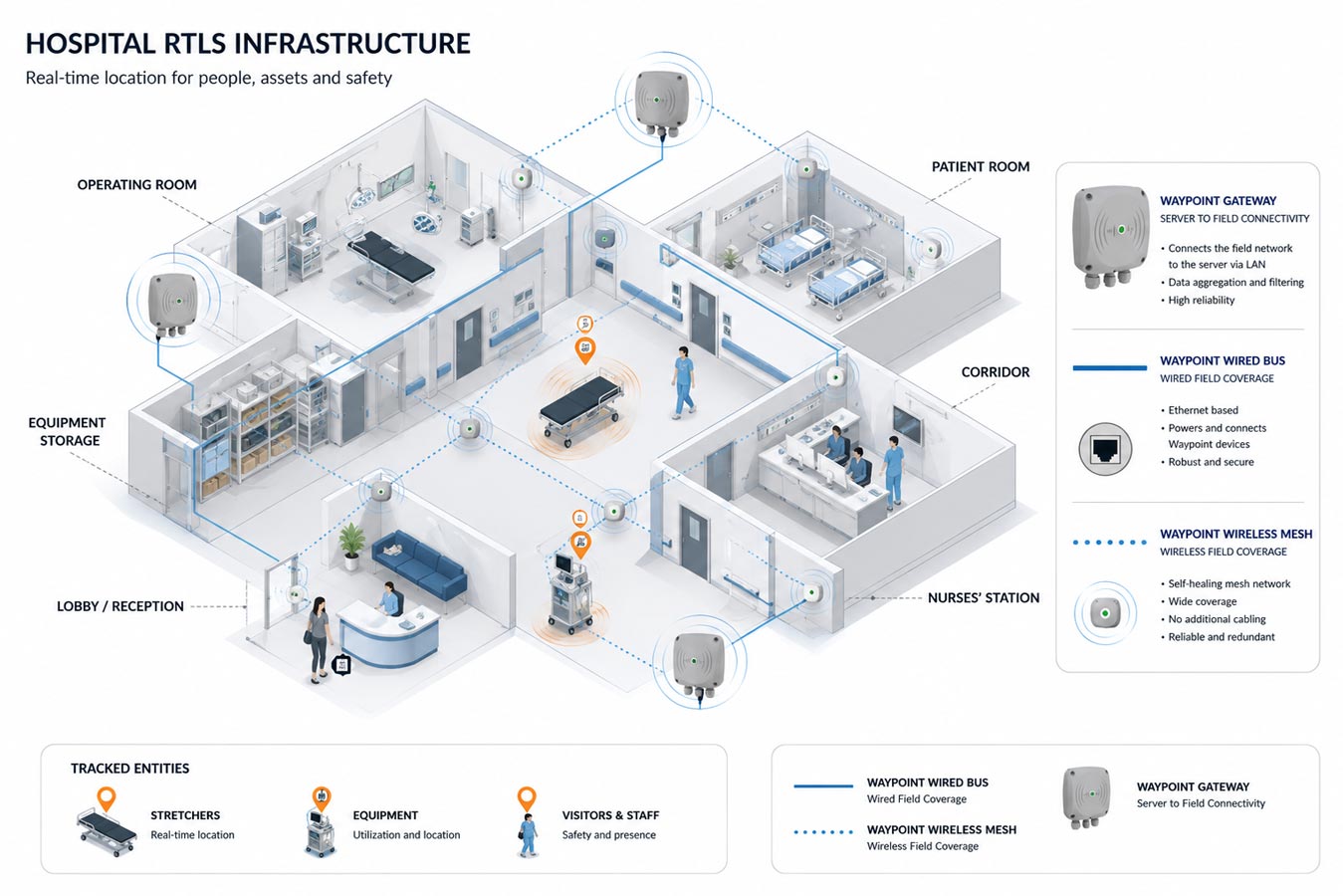
Coverage can be efficiently extended by interconnecting WAYPOINT through a simple four-wire RS-485 communication bus, combining rapid deployment, maximum communication reliability, and reduced infrastructure costs.
Wired architectures provide deterministic communication, continuous power availability, simplified maintenance, and stable positioning performance even in metallic, multi-level, or electromagnetically challenging environments.
Each BUS uses 4 twisted wires (CAT5 standard cable) to carry power and data and can extend up to a maximum total length of 1000 m.
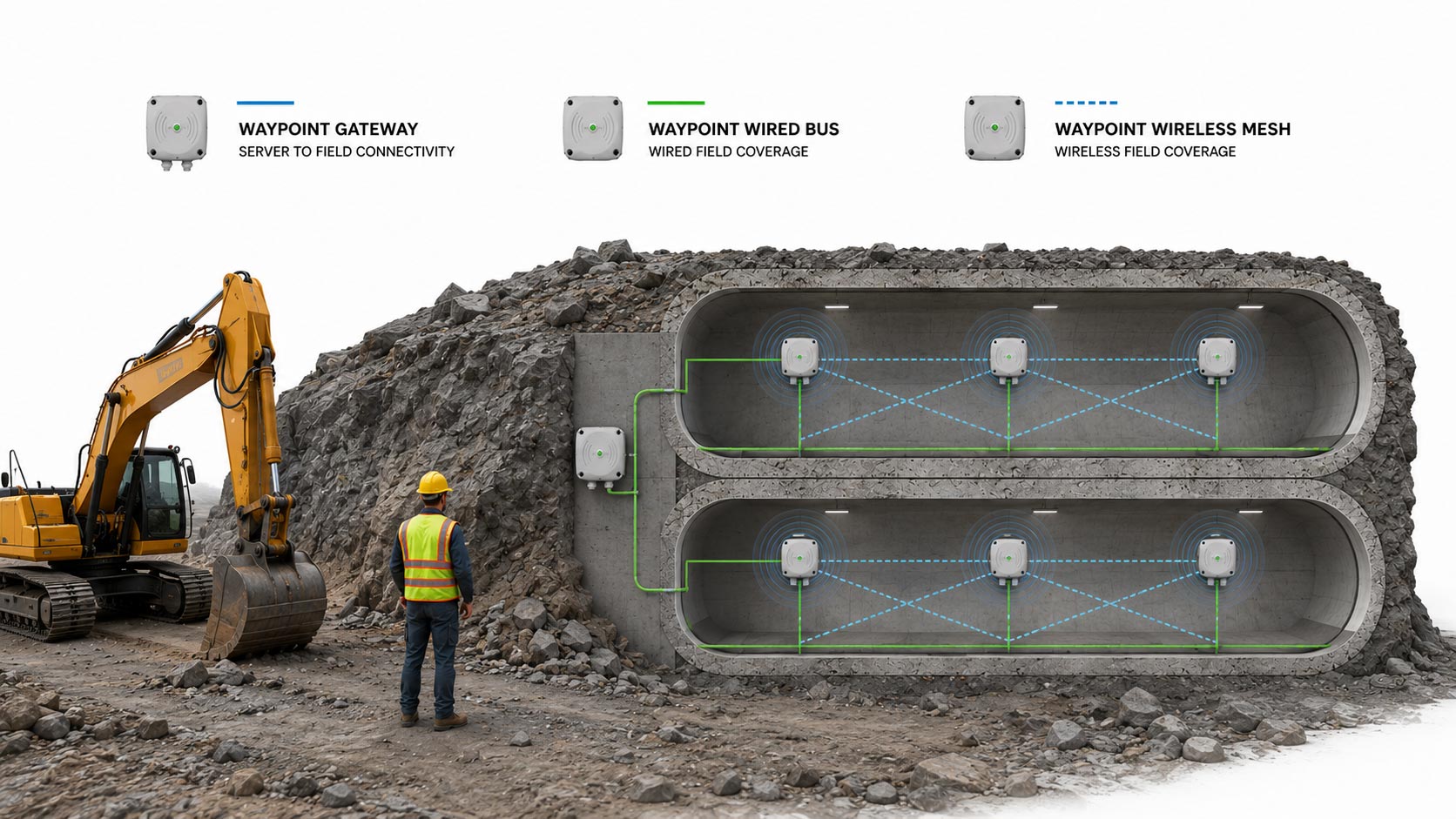
This deployment model is particularly effective in industrial facilities, warehouses, laboratories, hospitals, production lines, tunnels, ship compartments, and logistics infrastructures where cable routing is available or already present.
Linear Backbone
A linear topology proves to be the ideal solution for covering great geometric distances and particularly elongated environments.
This topology is ideal for elongated environments such as
- Ship corridors and decks
- Tunnels and galleries
- Production lines
- Conveyor systems
- Long warehouse aisles
Star or Grid Coverage
This topology provides uniform coverage while facilitating future infrastructure expansion.
The most common deployment architecture for:
- Warehouses
- Logistics centers
- Manufacturing facilities
- Laboratories
- Offices
- Storage areas
- Distribution hubs
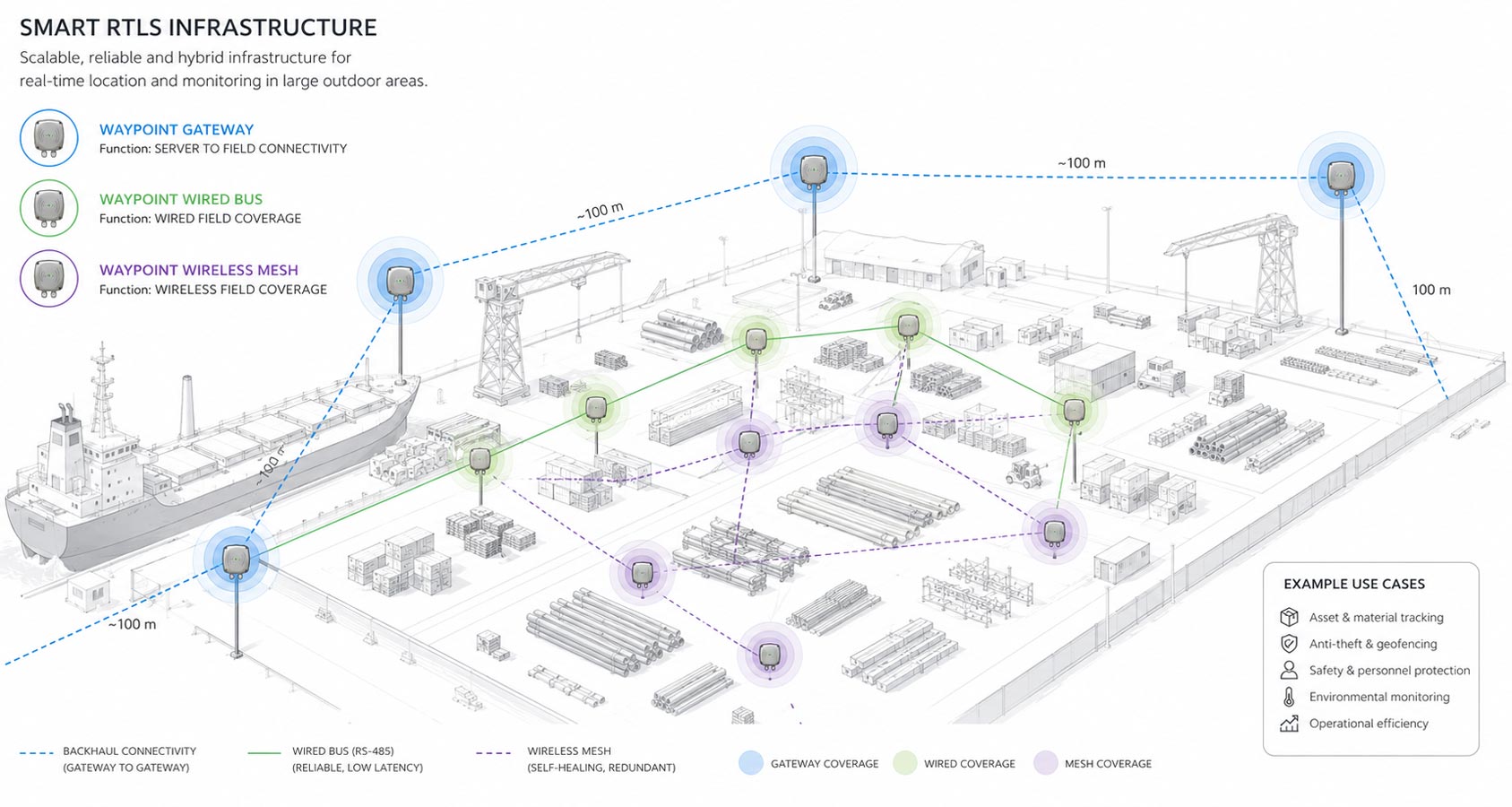
WIRELESS Area Coverage Infrastructure
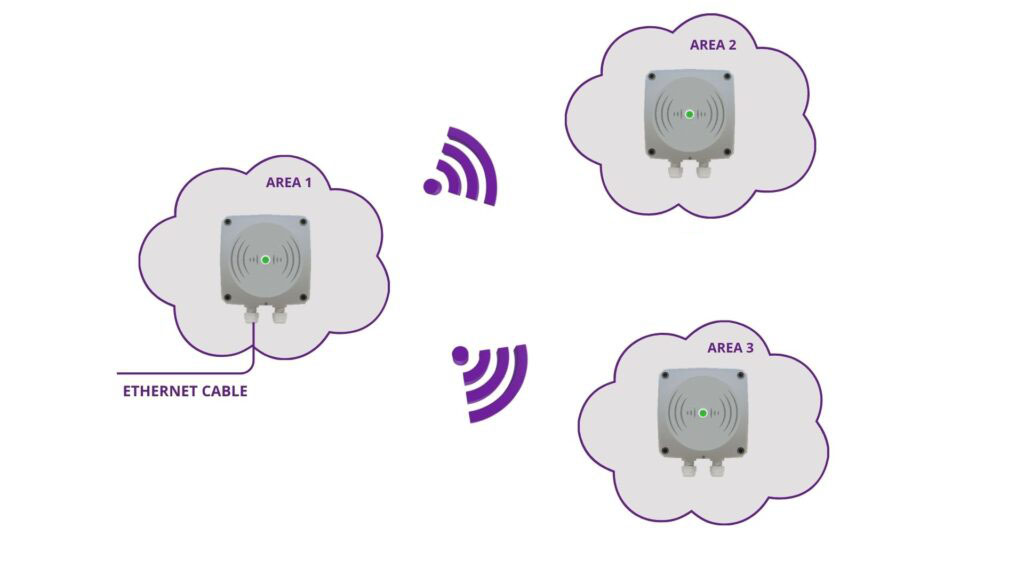
When cable installation is impractical, costly, or impossible, coverage can be extended using wireless WAYPOINT networks.
Wireless WAYPOINT communicate through a self-organizing Spanning-Tree architecture, requiring only local power. The distance between WAYPOINT typically ranges from 20 to 50 metres, depending on the installation environment, surrounding structures, obstacles, and whether the system is deployed indoors or outdoors.
The network automatically propagates positioning, diagnostic, and operational data toward the nearest connected infrastructure node, significantly reducing installation time while minimizing wiring requirements.
This deployment model is particularly effective for historical buildings, temporary installations, warehouses, ship refits, outdoor areas, construction sites, mining facilities, and environments where infrastructure modifications are difficult or expensive.
Wireless infrastructures can be progressively expanded over time, allowing coverage to grow according to operational requirements without major construction activities.
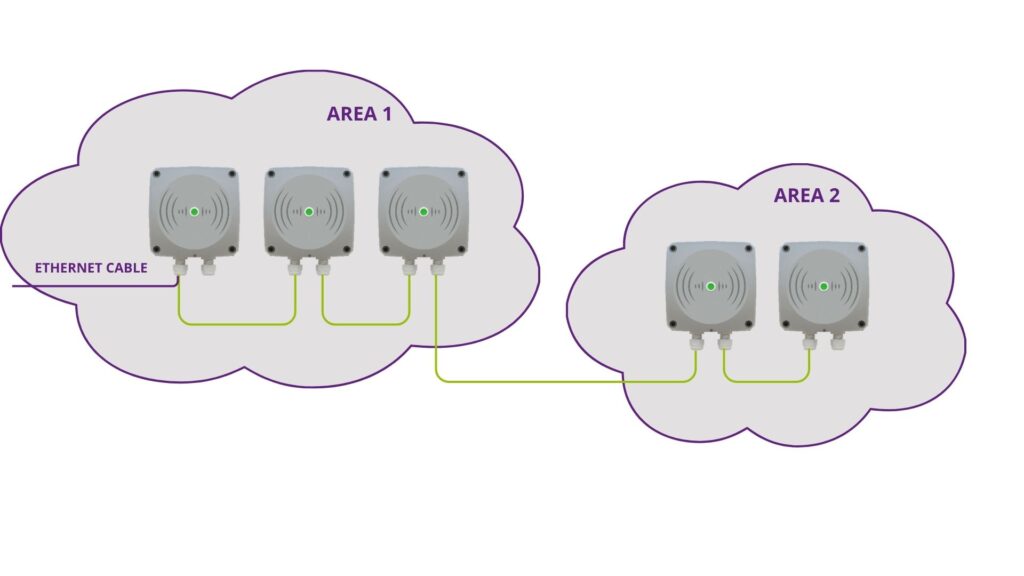
Wireless Extension of Wired Areas
This approach enables rapid deployment in areas where installing new cables would be impractical, disruptive, or economically unjustifiable.
Benefits
- Extends coverage without modifying the existing infrastructure
- Reduces installation time and costs
- Ideal for phased deployments and future expansions
- Minimizes disruption to ongoing operations
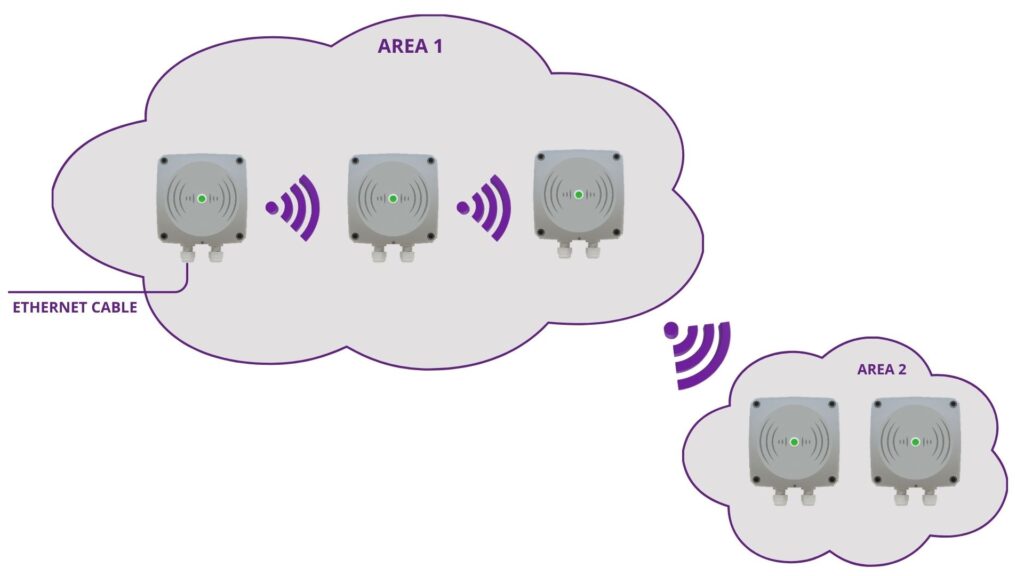
Multi-Hop Infrastructure Expansion
Wireless WAYPOINT can create multiple communication layers, progressively extending coverage far
beyond the original WIRED network.
Benefits
- Virtually unlimited infrastructure expansion
- No additional network cabling required
- Fast deployment of new operational areas
- Scalable architecture that grows with project requirements
- Lower installation and maintenance costs
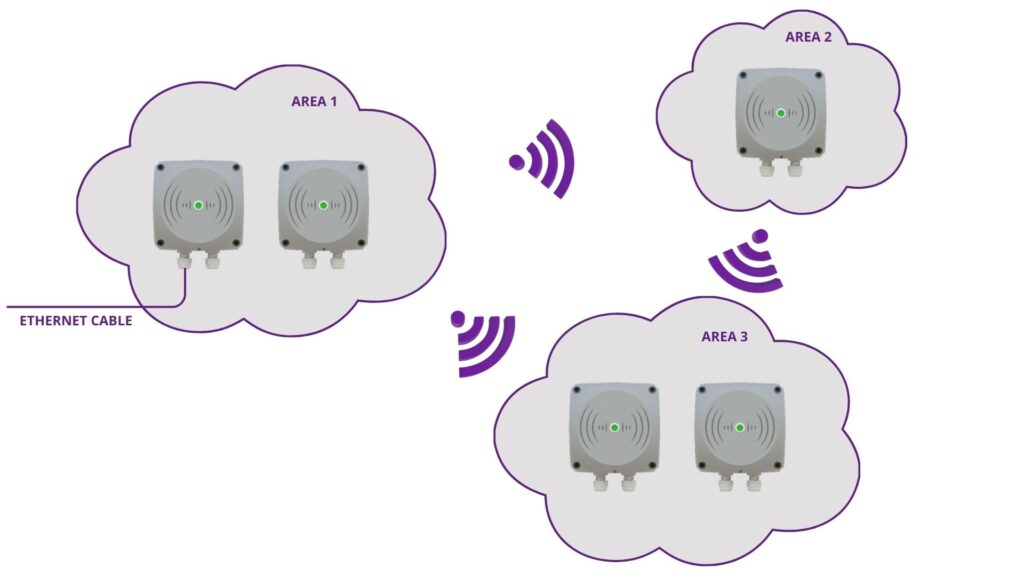
Redundant Communication Paths
Wireless infrastructures can use multiple parallel communication routes allowing data communication even if a device becomes unavailable.
The self-organizing network continuously evaluates available paths and automatically redirects traffic when needed, improving resilience and reducing the risk of coverage interruptions.
Benefits
- Increased network availability
- Automatic recovery from communication failures
- Improved operational continuity
- Enhanced resilience in harsh environments
- Reduced maintenance interventions and downtime
INFRASTRUCTURE MODELING
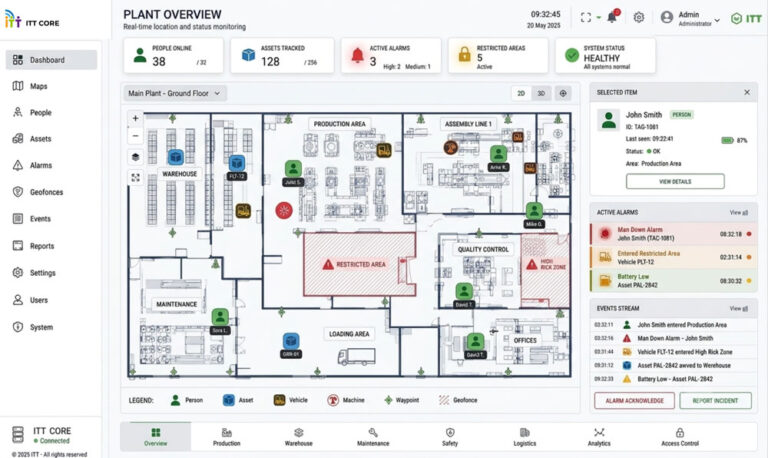
Regardless of the selected deployment architecture, the commissioning process is managed through the ITT
Core platform. After the physical installation, every WAYPOINT is automatically discovered and added to the project infrastructure. The installer can then define the physical position of each device by assigning its coordinates
within the environment.
Each WAYPOINT can be associated with:
- Unique device ID
- Physical coordinates (X, Y, Z)
- Installation area name
- Building, floor, deck, compartment, or operational zone
- Friendly name and description
- Project-specific metadata
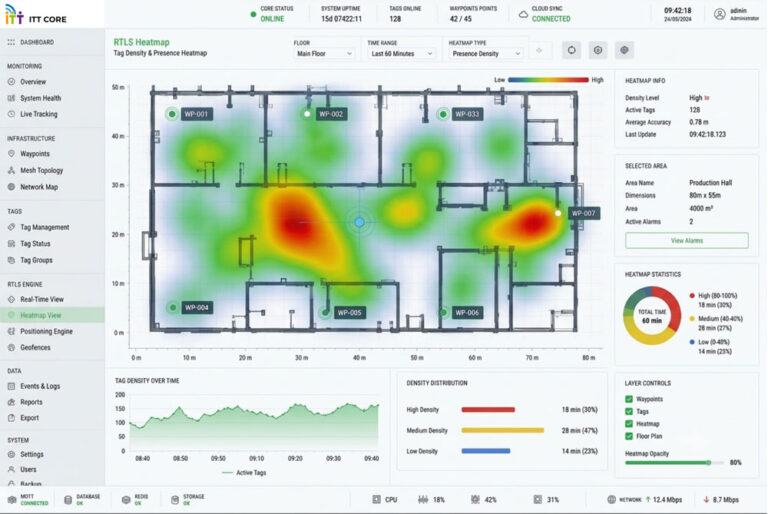
The physical positioning of WAYPOINT represents the foundation of the RTLS infrastructure. The
coordinates assigned during commissioning are used by the ITT positioning engine and patented
triangulation algorithms to calculate the real-time location of TAG throughout the installation.
For wireless deployments, ITT CORE additionally manages network topology, automatically establishing and
maintaining Cluster-Tree and Spanning-Tree relationships between devices while continuously optimizing
communication paths and radio coverage.
The platform continuously validates network connectivity, monitors radio signal quality, verifies
infrastructure health, and provides real-time diagnostics across the entire installation.
AUTOMATIC COMMISSIONING
Through dedicated APIs and management tools, operators can monitor the status of every WAYPOINT,
analyze communication performance, launch wireless scans, optimize network topology, and remotely
manage infrastructure settings throughout the system lifecycle.
Once the physical coordinates and infrastructure parameters have been defined, the RTLS platform
becomes immediately operational and ready for dashboards, alarms, analytics, process automation, and
third-party software integrations.
Key Features
- Automatic WAYPOINT discovery
- Physical infrastructure modeling
- X, Y, Z coordinate assignment
- Building, floor, deck, and area management
- Automatic topology generation
- Continuous connectivity monitoring
- Real-time diagnostics
- Wireless network optimization
- Remote maintenance and troubleshooting
- Open APIs for integration and automation
From Installation to Operation in a Few Steps
The ITT architecture has been designed to simplify deployment, minimize infrastructure costs, and maximize scalability. By combining wired and wireless technologies, self-forming mesh networking, automatic configuration, and open software tools, ITT enables organizations to deploy advanced RTLS solutions quickly and efficiently, even in the most demanding environments.
WHAT ABOUT PRIVACY AND SECURITY USING TAGS?
The ITT PLATFORM combines maximum safety in hazardous workplaces with complete protection of employee privacy. Specifically designed to protect workers in high-risk industrial environments and manage emergencies, the system does not perform unwarranted checks. Instead, data access is strictly regulated based on roles, tracked, and limited exclusively to cases of genuine need or urgency. This way, data minimization and regulatory compliance are natively integrated into a secure, responsible technology focused on protecting people.
Privacy
The set of internal procedures, rules, and regulations that a company adopts to protect the personal and sensitive data of customers, employees, and partners (in compliance with the GDPR and the Italian Privacy Code – Legislative Decree 196/2003, updated by Legislative Decree 101/2018). It includes obligations such as transparency in data use, the provision of clear information, information security management, staff training, and the definition of data controllers.
Applications display data only in cases of NECESSITY or URGENCY.
Law and Safety
WORKPLACE SAFETY: Legislative Decree 81/2008 and Presidential Decree 177/2011, which require mandatory training, the use of specific PPE, and the definition of safety procedures documented in the Risk Assessment Document (DVR). The new technical standard UNI 11958:2024 provides detailed technical guidelines for hazard identification, risk assessment, and emergency management in these environments.
CONFINED SPACES: Legislative Decree 81/2008 and Presidential Decree 177/2011.
WOULD YOU LIKE A DEMO?
Evaluate ITT in your own environment before making any investment.
We provide demonstration kits and evaluation hardware that allow your team to verify the technology under real operating conditions. Our demo material can be used for technical validation, commercial evaluation, proof-of-concept activities, and integration testing with your existing infrastructure.
Whether you are a system integrator, OEM, shipyard, industrial company, or software developer, our engineers can support you throughout the evaluation process—from initial architecture discussions to API integration and deployment planning.
Request a demonstration and discover how ITT can fit your application
WOULD YOU LIKE A QUOTE?
Receive an instant preliminary budget estimate.
Use our online configurator to calculate an indicative quotation based on the number of WAYPOINT and TAG required for your installation.
In just a few steps, you’ll receive a preliminary cost estimate together with an overview of the recommended infrastructure, helping you evaluate the project from both a technical and commercial perspective before requesting a formal proposal.
Start the configurator and estimate your project now